
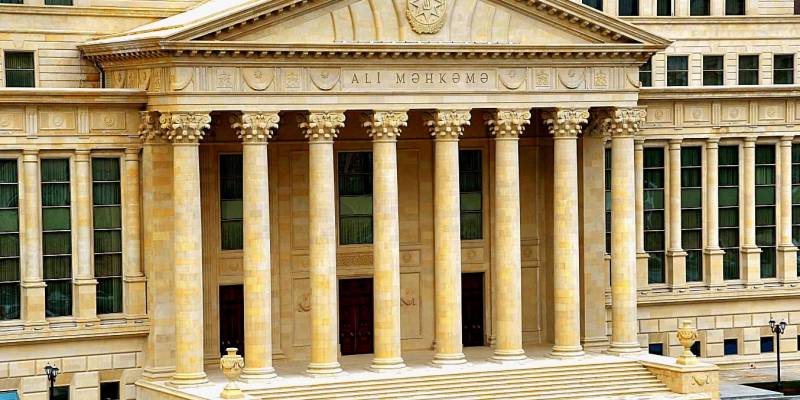
The Supreme Court of the Republic of Azerbaijan has articulated its legal position regarding leasing relations, offering a new perspective on the nature of this legal institution and the allocation of risks. The Court adopted this approach in a case concerning the identification of the party bearing the risk in relation to a leased asset destroyed during the Second Karabakh War.
The Supreme Court of the Republic of Azerbaijan has articulated its legal position regarding leasing relations, offering a new perspective on the nature of this legal institution and the allocation of risks. The Court adopted this approach in a case concerning the identification of the party bearing the risk in relation to a leased asset destroyed during the Second Karabakh War.
Although the lessee argued that war constitutes a force majeure event and that holding the lessee liable for payments related to the leased asset destroyed as a result of such an event would be contrary to law, the court of first instance did not uphold this position. In contrast, the court of appeal adopted a different stance, stating that in emergency situations, particularly in times of war, the lessee has no real ability to manage risks, and therefore, holding the lessee liable would be unjust.
The Commercial Chamber of the Supreme Court also confirmed the position of the appellate court. The Chamber’s reasoning emphasized the key argument that a systematic interpretation of Articles 448.1, 448.4, and 748.7.1 of the Civil Code demonstrates that the lessee is only liable for risks that are within their ability to manage. If the event occurs beyond the lessee’s will and control, for instance, as a result of war or other extraordinary circumstances, the lessee cannot be considered at fault for the non-performance of the obligation.
In this regard, another conclusion reached by the court is that demanding leasing payments for property that has been destroyed or rendered unusable contradicts Article 748.10.1 of the Civil Code and, more broadly, the very nature of leasing relations. A leasing agreement, as an economic instrument supporting entrepreneurial activity, must ensure a balance of interests between the parties and provide for a fair allocation of risks. Imposing the entire burden of risk on the lessee would neither be consistent with the nature of the law, nor with the principles of justice.
Another significant aspect of the decision relates to the Supreme Court’s position on the insurance of the leased asset. The Chamber emphasized that making the insurance of the leased object conditional solely upon the lessee’s request is inconsistent with the nature of the leasing institution. Although the leased property is placed at the disposal of the lessee for actual use, legal ownership remains with the lessor, and the economic benefit, including any insurance compensation, accrues to the lessor as the legal owner.
Thus, this decision of the Supreme Court may be considered a turning point not only in the resolution of the specific case, but also in the overall legal approach to leasing relations in judicial practice. According to the decision, the Civil Code establishes the lessee’s liability only for risks that are within their ability to manage, and it is impermissible to automatically assign liability to the lessee for force majeure events.

From now on, within the territory of the Republic of Azerbaijan, regardless of the grounds for te...
The Supreme Court of the Republic of Azerbaijan has set out an important legal position regarding...

Pursuant to the amendment, a new obligation for the employer has been added to paragraph “g” of A...

Azerbaijani Law “On Financial Leasing”, which will enter into force on 25 December 2026 establish...

Milli Majlis of the Republic of Azerbaijan has added Article 17.3 to the Law of the Republic of A...